Earlier this week, the United States imposed a ban on imports of Canadian alcohol. The measure took effect on September 29 and covers many packaged alcoholic beverages, while some bulk, unbottled shipments can still enter the United States. What might this mean for Alberta?
Understory examined historical alcohol trade data for insight. Here are five observations from the findings.
Five key findings
Exports of alcohol from Canada to the United States have stayed relatively flat since the late 1990s. However, after peaking in June 2021, exports began to decline. Alcohol imports from the United States to Canada were also largely flat for many years, but they have declined steadily since 2014. A particularly steep drop is visible around April 2025, when provinces were responding to U.S. trade measures with policies of their own. For example, Alberta stopped accepting U.S. liquor through its provincial system in March 2025, then resumed accepting it in June. Canadian alcohol imports from the U.S. are now at their lowest level in almost 30 years.
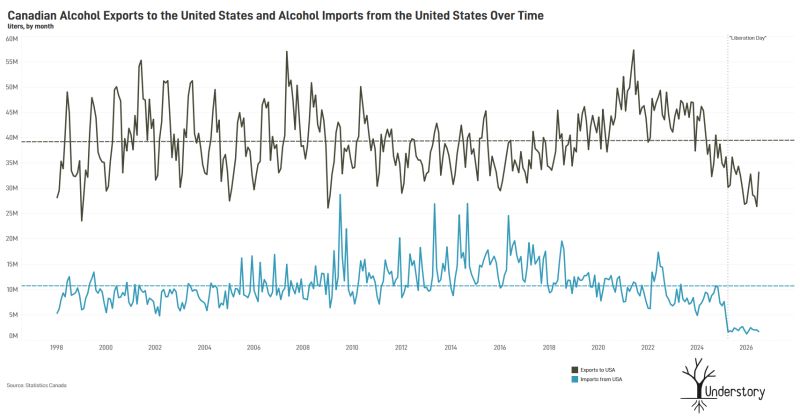
Figure 1. Canadian alcohol exports to the US and imports from the US over time. Alberta accounts for a small proportion of Canada’s alcohol exports to the United States.
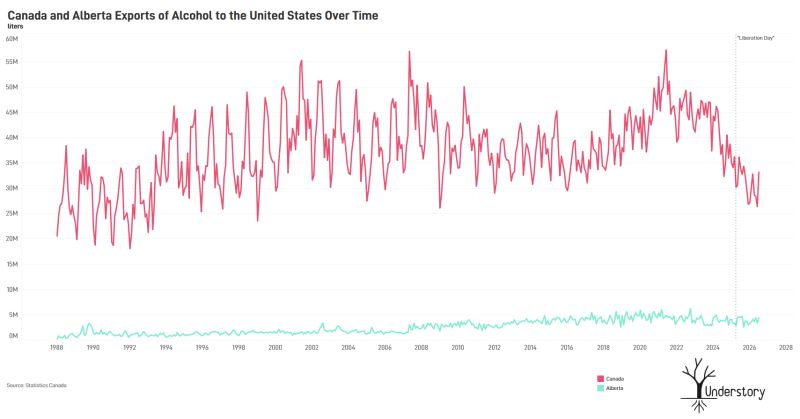
Figure 2. Canadian alcohol exports compared to Alberta exports to the US over time. When we look more closely at Alberta, a different picture emerges. Unlike Canada as a whole, Alberta has seen considerable growth in alcohol exports to the United States over the last 30 years, while its imports from the United States have declined. This suggests that the ban could create substantial exposure for some Alberta producers.
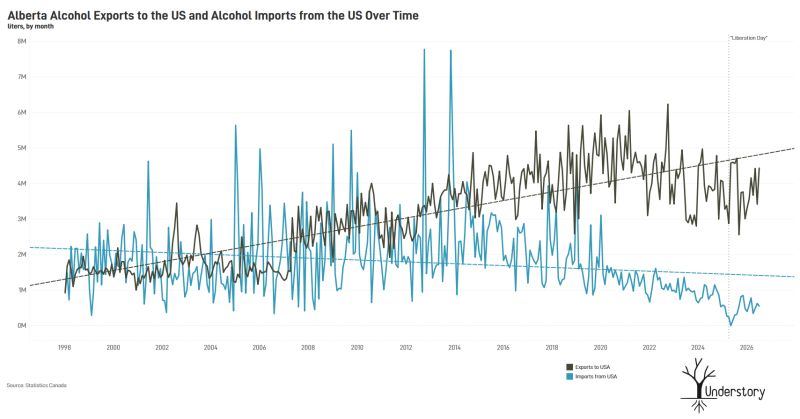
Figure 3. Alberta alcohol exports to the United States and imports from the United States over time. Alberta’s alcohol imports from the United States show a steady decline. Interestingly, the decline in beer imports roughly coincides with the removal of minimum production requirements for brewers in 2013, which helped enable the growth of craft breweries in Alberta. That growth may be one factor behind reduced beer imports.
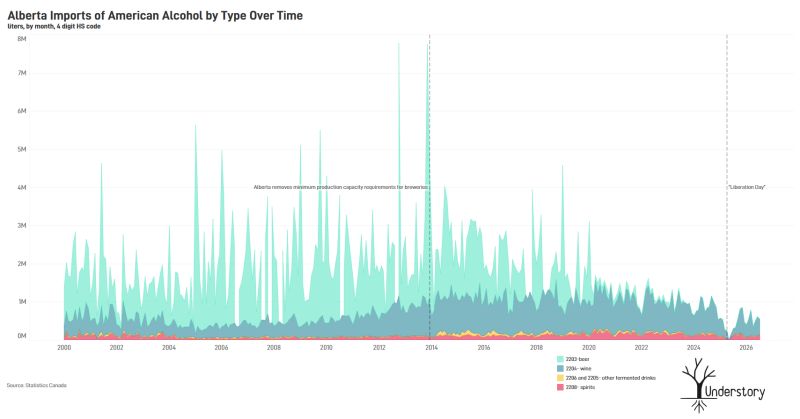
Figure 4. Alberta alcohol imports from the US by type over time. Almost all alcohol exports from Alberta to the United States are classified as either spirits or wine. Alberta has little conventional grape-wine production, so the wine category could include fruit wine or wine re-exported from elsewhere. The figures suggest that local distillers may be particularly exposed to the new U.S. ban. Major operations such as Black Velvet in Lethbridge and Alberta Distillers in Calgary may be able to mitigate its effects if they can export bulk product for bottling in the United States. Smaller craft distillers that export bottled products to the U.S. could face greater disruption.
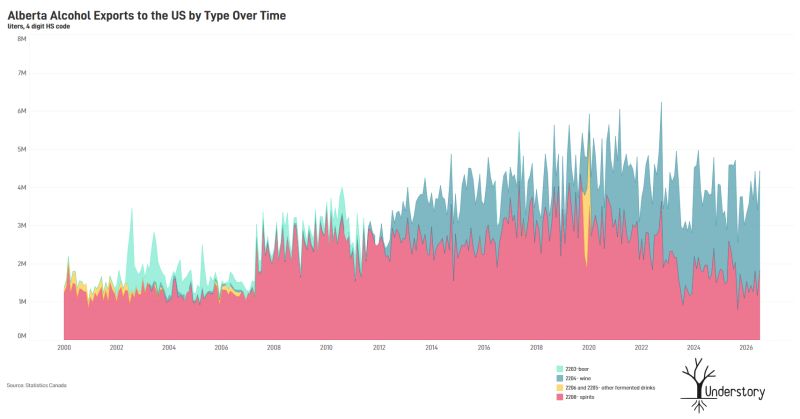
Figure 5. Alberta alcohol exports to the US by type over time.
Methodology
Last updated:
Looking below the surface of your sector?
Are you an alcohol producer affected by the new U.S. policy? Reach out to explore how Understory could help you diversify into new markets.
This insight was also shared on LinkedIn. Join the conversation there.